Getting Started as a New Superintendent
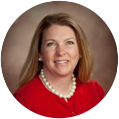
Dr. Stacy Winslow (Superintendent, Derry Township School District, PA)
Dr. Winslow reflects on her first year as a new superintendent and offers advice for others in a similar position.
First time reading? Learn more about Education Reinventors here.
Becoming the leader of a school district is never easy. That’s doubly true when you assume the role in the middle of a global pandemic.
Stacy Winslow became superintendent of Pennsylvania’s Derry Township School District just under one year ago, after over 25 years as a teacher and administrator.
In our interview, Stacy shared best practices that have helped her navigate the multiple challenges of her first year. These range from building personal relationships with board and community members, to practicing self-care, to, most importantly, keeping students’ social, emotional, and academic well-being at the center of all district work.
Learn more about Stacy and her district on LinkedIn and Twitter.
This interview has been edited for length and clarity.
connect

Can you introduce yourself and your professional background?
I’m Stacy Winslow, superintendent of Derry Township School District in Hershey, Pennsylvania. We're a small suburban district of around 3,400 students.
I've been in education for 29 years. I worked in Lancaster County, PA for almost 20 years, 18 of which were in the classroom, with two years in administration. I first came to Hershey as a middle school principal, which was probably my favorite job ever. I absolutely loved it. Shortly after that, I became assistant to the superintendent for curriculum instruction. After eight years in that role, I became superintendent. I’ve been in this position for almost a year. It’s a bit hard to believe, considering earlier in my career I had never really pictured myself leaving the classroom, much less serving at the superintendent level.
You've talked about your mindset shift from “I'm not sure what I'm doing here” to, “This is where I'm meant to be for students.” Can you describe the reasons behind that shift?
Some kids weren't even born on home plate – they start life with every disadvantage. I decided that it’s my mission to be here for all kids, regardless of what their background is or what their troubles are. That’s what education is all about. It’s the opportunity to find a way out of whatever situation you were handed, and it’s the school’s – and my – responsibility to give all students the opportunity to be successful.
What were your top priorities coming into the superintendent role? How were these priorities influenced by the pandemic?
I came into the superintendency mid-pandemic. The pandemic brought to light a lot of issues that we were already facing and also gave a sense of urgency to work that we were already doing.
A top priority is ensuring that all students have access to a rigorous, high-level curriculum. I also want to ensure that all students, when they walk through our halls, feel welcomed and feel like they belong here. In order to access academics, students need to feel like they belong.
Even before the pandemic, many students were struggling with a sense of isolation, and the pandemic exacerbated those feelings. As students come back into the school building, social-emotional learning (SEL) became a key focus area for us.
What were the first things you did after assuming the superintendent role?
I wrote several superintendent newsletters, mostly to highlight the importance of certain issues to the board and the community. What is equity, really? What is SEL, really? Why should we welcome these concepts? I thought it was really important to educate not just the students but also the community about our work.
I also reached out to the board and community members and set up individual meetings, just so we could get to know each other. Developing those individual relationships at the outset was critical.
What’s the most challenging thing about the superintendent position?
Trying to find my feet while stepping in during a crisis environment.
I've been fortunate to have an executive coach over the last several years. We'd done a lot of work around the concept of VUCA – volatility, uncertainty, complexity, and ambiguity. There is always an element of VUCA in education, but during the pandemic it was VUCA up to the eyeballs every day.
Things have gotten better. Now that I'm not rewriting health and safety plans all the time, I can really focus on my job. I'm working to bring back some of our great initiatives that had to be slowed down during the pandemic. So, the transition phase from pandemic management to getting back to the important elements of my job has been tough.
One key thing I learned during that transition is that you have to take care of yourself. I'd heard the expression that “if you don't take care of yourself, you can't take care of other people.” And I never really internalized that. For a long time, I thought that was just advice for other people. But then, I realized that if you don't take care of yourself, you will actually hurt other people.
That’s what made me step back and take stock of what I can do to better take care of myself. Am I sleeping enough? Am I eating right? Am I exercising? That’s the biggest piece of advice I'd give to someone coming into this role – because you will be working long hours and you can't help it. You have to carve out space to take care of yourself. Because if you don't, you’ll become the type of leader you don’t want to be.
As a new superintendent, how do you balance managing different stakeholder relationships?
It’s crucial to remember that we all tell narratives in our own heads about other people and about how we view certain situations. It’s a human thing to do. But, it’s also very important to know when to recognize and reverse this thinking. There are going to be people who agree with you and people who don’t. But, in the end, you all care about the same thing: doing what’s right for kids. You may have different ideas about how to get there, but in the end that’s the common goal. Once you realize that we’re all after the same goal, it helps you lean in and be willing to listen, as opposed to digging in and fighting.
You serve in a politically mixed district. How have you been navigating that over the last few years?
Carefully. I was a civics teacher for 16 years. I love civics. I love politics. I consider myself a huge patriot. Over the last couple of years, we’ve become so divided and, in many ways, we’ve lost the art of public discourse. That makes me sad, because I think public discourse is fun. I love letting kids have those really important conversations.
I do find myself feeling somewhat disappointed that education and kids’ futures have become a political platform, but I try to keep what’s good for kids’ social and academic well-being at the center. I believe public education is the heartbeat of democracy.
My job – our job as educators – is not to impose my opinion on students, but to help them become critical consumers of information and to form their own opinions.
What’s been the most gratifying aspect of your first year as superintendent?
I’m so ridiculously proud of the resiliency our teachers and our staff and our kids have shown during the pandemic. I’m so impressed with their ability to do such hard things on such short notice in the ever-changing environment. It blew my mind how quickly teachers, staff, and administration adapted to the new normal.
As things open up again, I’m experiencing a surge of gratifying moments. For example, this month is “Music in our Schools Month.” It’s the first time in two years I’ve heard kids singing. It’s been emotional – I’m tearing up talking about it. Also, getting to go to sporting events and seeing kids do the things that they love without worrying that they’re going to be part of a superspreader event. It’s amazing.
Do you have a message you want to share with other superintendents?
It’s a tough job – I think the average superintendency is just 2.6 years. So, I’d send them love and encouragement so that they can stick around and be there for their people.
Don’t burn yourself out. Take care of yourself.

Education Reinventors, powered by HP, is a virtual, national community of U.S. superintendents reimagining education leadership in the new normal. We enable superintendents to connect, discuss shared challenges, and brainstorm solutions to improve outcomes for students and community members.
Subscribe for weekly insights here.
Register to participate in our next roundtable discussion here.
(Superintendent, Derry Township School District, PA)

Related Posts

Overcoming Limited Resources to Support Your Students
Lori shares creative ways she fills resource gaps to expand opportunities for students

Getting Started as a New Superintendent
Dr. Winslow reflects on her first year as a new superintendent and offers advice for others in a similar position.

Driving Equity through Career Prep Programs
Dr. Balderas makes the case for applying an equity lens to career readiness initiatives, to prepare all students for the future.

Forging a Technology Vision for Your District
Dr. Willis explores the superintendent's role in creating a culture of innovation in the district.

Career Readiness for Every Student
Patrick Fletcher discusses his district's efforts to rethink career readiness to prepare students for a rapidly evolving workforce.

Increasing Graduation Rates and Forging Pathways to Success
Dr. Shepherd reflects on how to change paradigms and pathways for "student success".
Enabling Student Voice and Choice
Dr. Rouse offers advice around empowering students to take greater ownership of their education experience.
Meeting Registration


Topic
Getting "Education Innovation" Right: Philosophy and Practice
Description
SUPERINTENDENT ROUNDTABLE DISCUSSION
What does "education innovation" really mean anymore? Is it new approaches in leadership, pedagogy, technology - or something else entirely?
Join superintendents and HP education leaders to challenge current paradigms and brainstorm ideas to fuel new and lasting changes in your district.
This roundtable will be both conceptual and practical, with discussion about the big questions of education, as well as actionable exercises to help with your day-to-day leadership.
---
This sessios is part of HP's Education Reinveotors, a community for superindendents to connect, discuss shared challenges, and brainstorm solutions. Please look out for invitations to future events in the coming weeks.
By registering for this forum, you agree to share the information with HP, Inc. for marketing purpose. HP respects your privacy. Visit HP's Privacy Statement to learn how HP collects and uses your personal data:
https://ssl.www8.hp.com/us/en/privacy/privacy.html
Time
Feb 25, 2022 11:00 AM in Eastern Time (US and Canada)